
A more emotionally stable, adaptable Saarlooswolfdog
Another central aim of the SaarGen program
The Saarlooswolfdog’s temperament is unique.
Reserved, sensitive, selective, and deeply attached to its family, the Saarlooswolfdog cannot be assessed according to the same expectations as a companion dog bred to seek human contact spontaneously or to work.
Saarlooswolfdog Temperament: Key Points
When the Saarlooswolfdog’s sensitivity becomes excessive, it can become a real handicap for the dog and its family.
A dog that experiences every new thing as a threat, that never manages to recover after stimulation, or that remains paralyzed by fear despite appropriate support encounters significant difficulties in daily life.
This is precisely where one of the major challenges of the SaarGen program lies: preserving the Saarlooswolfdog’s behavioral identity while reducing the pathological aspect of its sensitivity.
Genetic diversity must therefore not be viewed solely as a disease-prevention tool. It can also help restore greater emotional stability, better adaptability, and a more balanced family life.
01
Saarlooswolfdog Temperament: A Selection Challenge
In a breed with a limited population and a narrow genetic base, selection cannot focus only on appearance or immediate conformity to the standard. Maintaining a viable population requires consideration of all heritable traits: health, conformation, genetic diversity, and behavior.
The Saarlooswolfdog’s temperament is a particularly sensitive issue. Its reserve is not a flaw in itself. It is part of the breed’s identity. A balanced Saarlooswolfdog does not need to like every person, seek contact with every stranger, or behave like a highly demonstrative dog.
On the other hand, intense and persistent fear can prevent the animal from functioning normally. It can complicate:
- veterinary care, handling by strangers, or stays in boarding facilities;
- travel through urban areas or near other people;
- welcoming visitors;
- walks in varied and unpredictable environments;
- living with everyday noises and unexpected events;
- socializing a young dog when fear prevents it from thinking, learning, and developing;
- integration into a family without specialist experience when the dog struggles to form bonds or adapt to the pace of family life.
The distinction between reserve and pathological fear is therefore essential. It requires fine, repeated, and contextualized observation, rather than a judgment based on an isolated reaction.
02
SaarGen’s Third Pillar: Preserving the Saarlooswolfdog’s Temperament
The SaarGen program rests on three complementary pillars: health, phenotype, and temperament. Temperament holds an important place among them.
The third pillar treats behavior as an absolute, non-negotiable priority and as a selection criterion in every generation. This does not mean that every selected dog will be highly sociable; selection must always be guided by a long-term perspective.
If a dog’s behavior reveals disabling hypersensitivity, significant instability, or a lasting inability to manage ordinary situations, it must not contribute to the next generation.
This hierarchy is deliberate. It prevents a behavioral problem from being perpetuated simply because a dog is visually or genetically interesting. It also reminds us that an outcross program involves more than introducing new genes: it must rigorously select for the qualities we wish to retain and against those we wish to reduce.
This is therefore a key selection priority for our founders and their future offspring. Genetic diversity is a means to an end. The goal remains the gradual development of a healthy, balanced Saarlooswolfdog that stays true to its identity.
Research into canine behavior shows that several behavioral traits have a heritable component and can be selected for, although their expression also depends on the environment, training, and experience.
03
Eliminating pathology, not identity
A characteristic to preserve
Reserve that allows the dog to cope
The dog observes, analyzes, steps back, processes information, and then chooses its response. It remains able to learn and adapt.
A difficulty to reduce
Pathological fear
The dog remains overwhelmed, flees or freezes, and does not return to normal functioning despite appropriate support.
A Saarlooswolfdog must:
Remain reserved without becoming terrified or unable to cope.
Be selective without being reactive.
Calm and observant, able to take the time to assess and understand a situation.
Watch an unfamiliar person and allow curiosity to develop at its own pace.
Sensitive without being overwhelmed by every event, and able to recover quickly.
Have a strong desire to please within its own family.
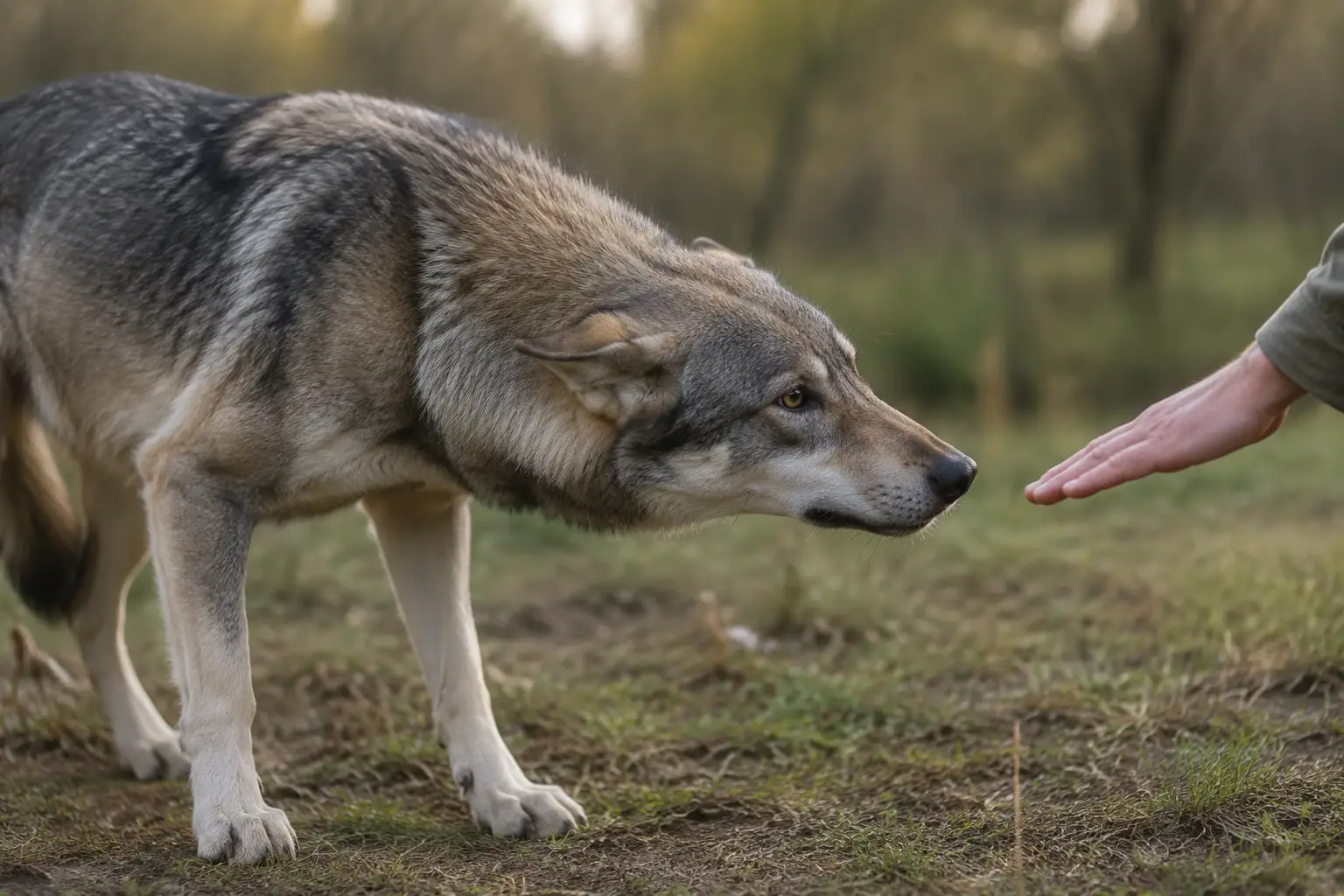
Observe, approach, recover:
emotional stability allows reserve and curiosity to coexist, giving the dog more freedom to adapt.
This distinction is fundamental. Successful behavioral selection does not seek to erase a breed’s temperament, but to distinguish its functional traits from their excessive expressions.
Reserve allows the Saarlooswolfdog to observe before interacting. Selectivity allows it to avoid immediately trusting everyone. Calmness allows it to step back and process information from its surroundings.
Chronic fear, by contrast, restricts behavioral freedom. It can lead to avoidance strategies, persistent flight, an inability to recover after stress, or defensive reactions. Sensitivity then ceases to serve an adaptive role: it becomes a source of suffering for the dog and a major difficulty for those around it.
The aim is therefore to reduce this pathological component so that ordinary socialization can support the development of a balanced adult. This does not mean that a Saarlooswolfdog will become comfortable everywhere or enjoy every situation. It means that it will be able to learn, recover, and function without requiring a socialization program beyond the reach of most families and breeders.
04
Will to please
“Will to please” describes a dog’s predisposition to cooperate spontaneously with people, seek their approval, and find intrinsic satisfaction in that cooperation.
It is more than obeying a command to obtain a reward: it is a social motivation that leads the dog to work, learn, or act with its person’s expectations in mind.
This ability is the result of several millennia of domestication followed by selective breeding. Working breeds such as the German Shepherd Dog, Border Collie, and Labrador have been selected to strengthen their ability to collaborate closely with people. Their will to please is generally highly developed: the dog naturally seeks interaction, approval, and guidance from its person and takes personal pleasure in pleasing them.
With a substantial German Shepherd Dog contribution in its ancestry, the Saarlooswolfdog also retains a significant measure of this strong will to please. Naturally, this tendency is counterbalanced by the wolf’s behavioral legacy, which favors reasoning, caution, and independent decision-making. The Saarlooswolfdog can therefore cooperate with its person, but often does so more selectively and less demonstratively than conventional working breeds.
By contrast, some more primitive or northern breeds generally have a less pronounced will to please. They can learn and cooperate, but their motivation rests more on their own interests than on seeking human approval. The wolf, meanwhile, has no will to please toward humans. Its behavior is guided by its own needs and desires and by the constraints of its environment. It can cooperate with other wolves to serve a common purpose, but it does not seek to satisfy a human or take pleasure in obeying one.
The Saarlooswolfdog’s will to please therefore occupies an intermediate position: enough to allow genuine cooperation with people, but always filtered through the caution and independence inherited from the wolf.
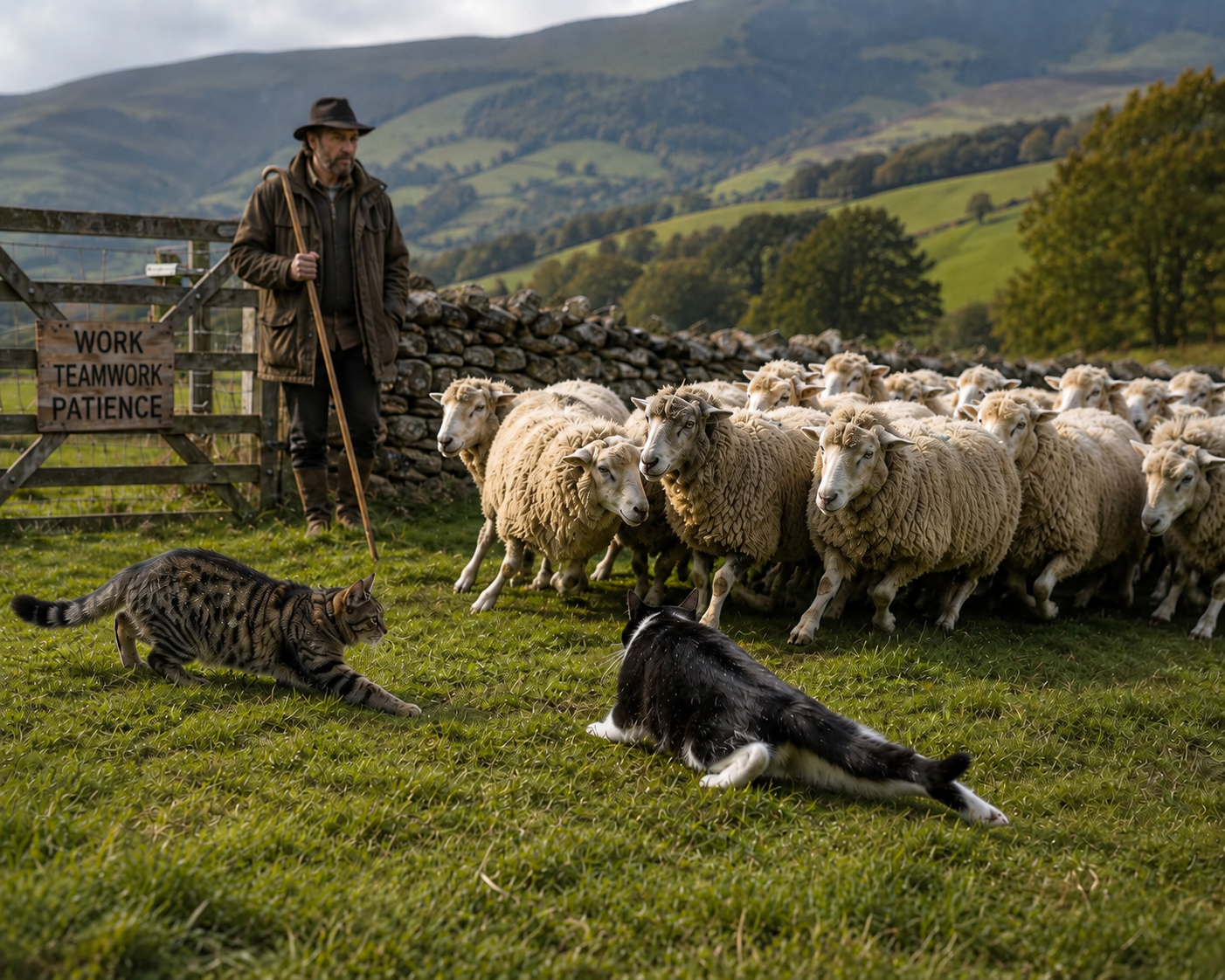
An example of measuring will to please
High
Moderate
Low
Very low
Malinois
German Shepherd
Labrador
Czechoslovakian Wolfdog
Saarlooswolfdog
Husky
Northern Inuit Dog
Cat
Wolf
05
Why Saarlooswolfdog Temperament Takes Priority Over Phenotype in F1–F3
In a genetic program spanning several generations, results cannot be assessed solely in the short term. Early generations may show considerable variation in conformation: proportions, coat texture, ears, angulation, movement, or color.
These differences are not necessarily failures. They can be transitional stages in building a more diverse population.
In F1, F2, and F3, temperament takes priority over phenotype. A dog may therefore be excluded despite an attractive appearance if its behavior does not meet the established criteria. Conversely, a descendant with temporary differences in appearance may be retained if it has good emotional stability, satisfactory health, and a genetic profile useful to the program.
Appearance can be developed through gradual selection, including selection for polygenic traits. Behavior, however, must not be left until later. Emotional instability perpetuated over several generations could become entrenched in the population and compromise the final goal.
This is a long-term strategy: the aim is not to produce a perfect dog in F1, but to build a stable population in F5 and beyond.
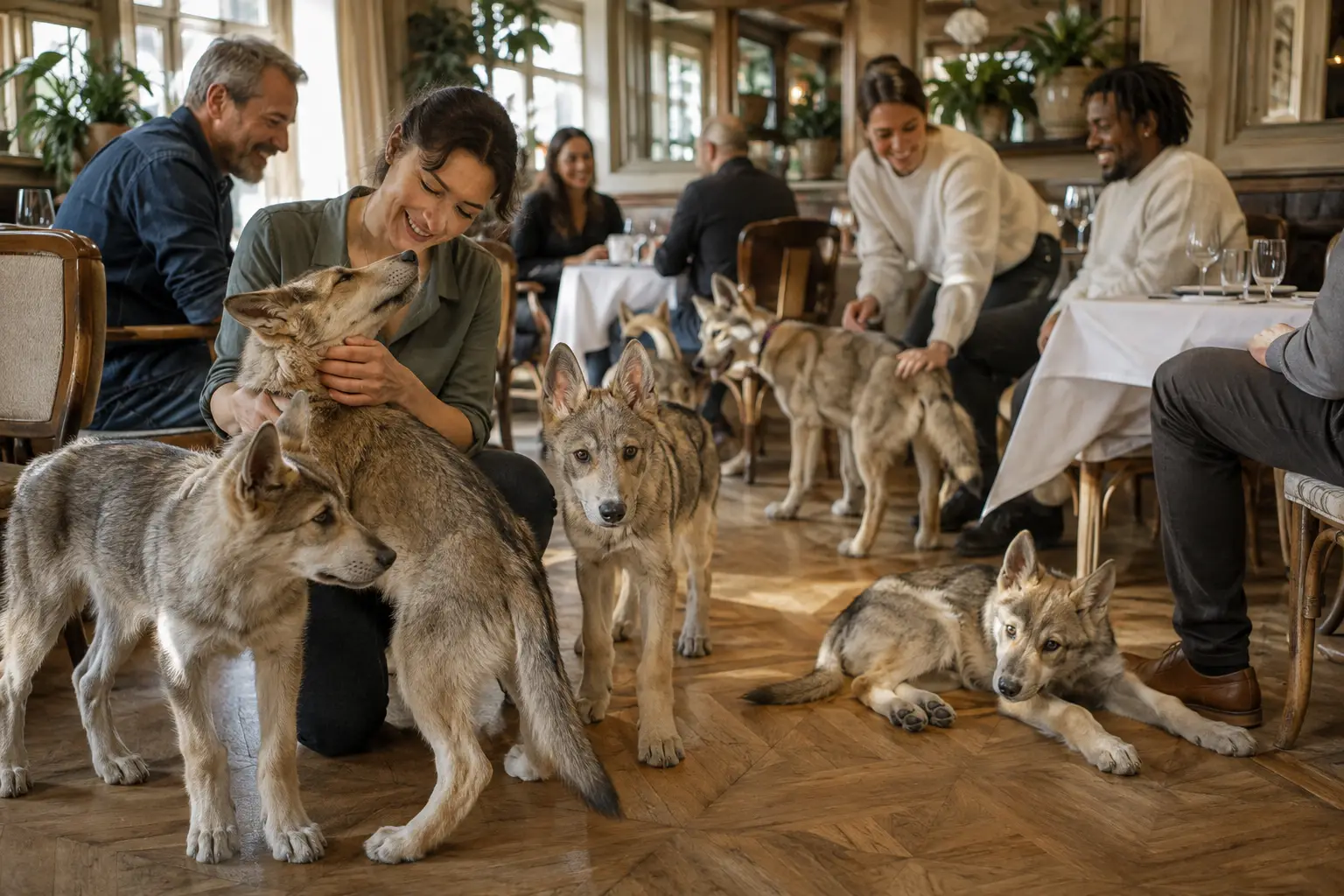
From the first crosses to future Saarlooswolfdogs: developing a population that can cope with varied environments.
06
Selection grounded in ethology
Ethology allows us to move beyond subjective impressions such as “this dog is nice” or “this dog is difficult.” It seeks to understand behavior through an appropriate framework: its triggers, intensity, and frequency, and the animal’s ability to return to an emotionally stable state. Within SaarGen, a meaningful behavioral assessment should consider, in particular:
1 — Responses to new experiences
Can the dog observe an unfamiliar situation without immediately becoming overwhelmed?
2 — Recovery after stress
After a stressful stimulus, does the dog gradually return to functional behavior?
3 — The quality of its assessment of a situation
Can it take in information from its surroundings and respond as the situation changes?
4 — Necessary handling
Can the dog accept care, travel, and routine handling with appropriate, respectful support?
5 — Behavior across contexts
Does its behavior remain consistent at home, outdoors, with familiar people, and in a new environment?
6 — Communication and avoidance strategies
Can it show discomfort and move away without disproportionate escalation?
This approach does not seek to impose standardized behavior on every individual. It aims to identify dogs whose emotional functioning is stable enough to adapt to family life.
Studies in canine behavioral genetics nevertheless emphasize that traits such as fear, sociability, and learning ability are complex. They result from interactions between multiple genetic and environmental factors. Selection must therefore rely on repeated observations in context, taking into account the dog’s condition, age, and way of life, together with comparable data and follow-up of descendants, rather than on a single test or impression.
Interactions with other dogs
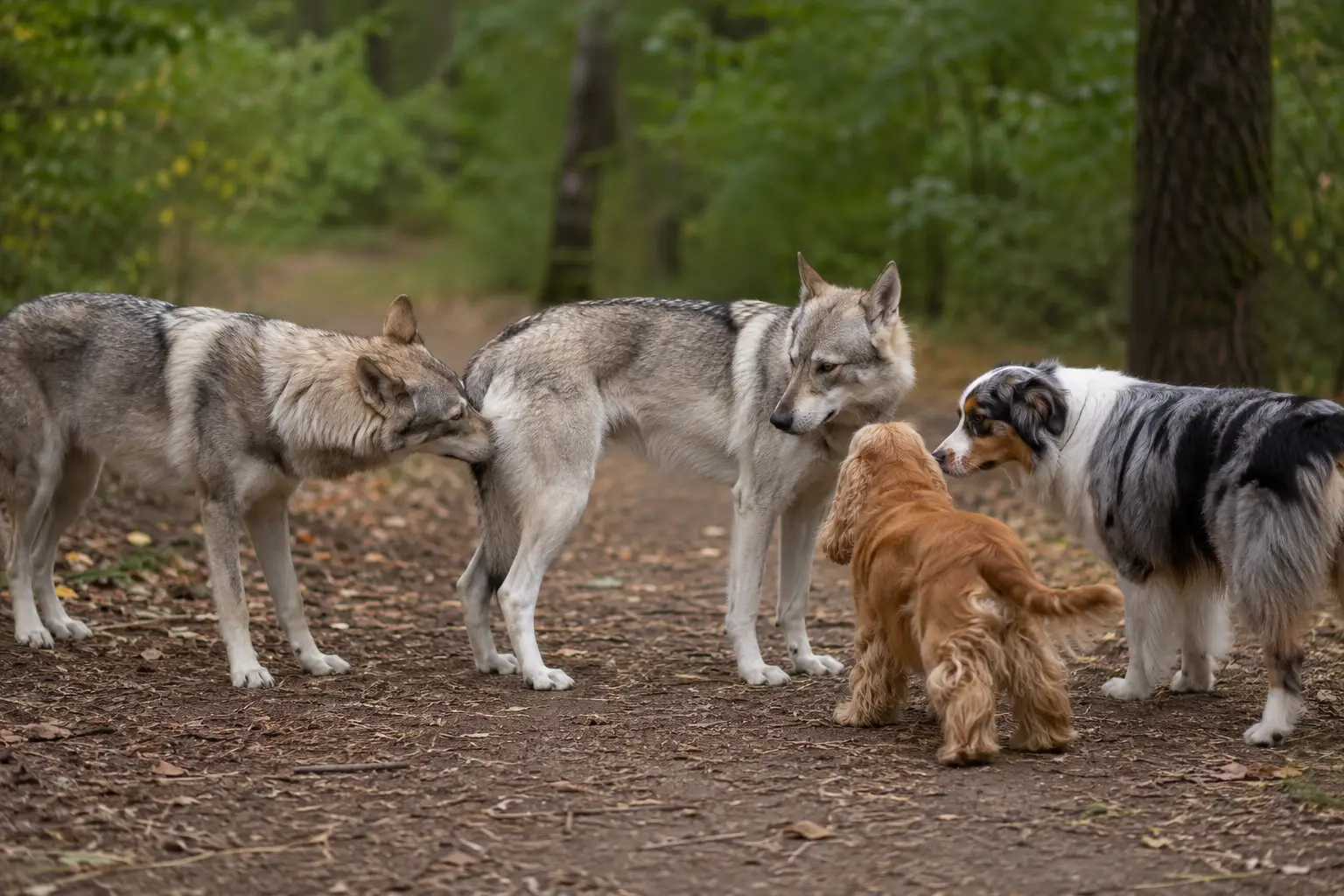
Sociability with other dogs develops largely through appropriate socialization, established by adopting families and maintained throughout the dog’s life. This work is essential, but cannot be separated from each dog’s genetic predispositions. The ability to approach a variety of other dogs calmly, particularly dogs of the same sex, can also be influenced by hormonal reactivity, tolerance thresholds, or a degree of inflexibility toward unfamiliar situations.
Selection must therefore consider these abilities rather than relying solely on the dog’s behavior in familiar surroundings or within its usual group. It is also important to assess its social flexibility, its ability to communicate without escalation, and its capacity to maintain a measured response to dogs whose signals may differ greatly from its own. The goal is not to produce dogs that enjoy every encounter, but Saarlooswolfdogs that can manage encounters with discernment and restraint. Socialization remains essential, but genetic influence is very real and must also form an integral part of our selection work.
07
A Saarlooswolfdog better able to cope with everyday life
A more stable Saarlooswolfdog would not be a Saarlooswolfdog stripped of its identity. It would be a dog whose breed qualities could be expressed without becoming overly limiting.
Modern life presents many situations that dogs must learn to manage: car journeys, veterinary visits, house moves, urban noise, children, occasional encounters, changes in routine, and periods of temporary isolation.
No selection can guarantee that a dog will be comfortable in every circumstance. It can, however, aim to produce dogs with greater ability to adapt and recover.
This approach also protects families. A very fearful wolfdog may require constant expertise, substantial adjustments, and an emotional commitment that not every adopting family can provide. By selecting for emotional stability, SaarGen seeks to bring the dog’s needs closer to the realistic capabilities of a responsible family.
This is where genetic diversity takes on its full significance. It does more than reduce the probability of certain recessive diseases: it broadens selection options and helps prevent the population from becoming confined to an overly narrow set of characteristics, including behavioral ones.
08
Epigenetics
The Influence of Ancestors’ Lifestyles and Behavior
Epigenetics refers to mechanisms that modulate gene expression without changing the DNA sequence itself. In other words, the genetic inheritance passed on by parents is not a fixed program: certain genes can be activated or switched off depending on the environment, stress, diet, experiences, and living conditions. In our dogs, these mechanisms highlight the importance of the conditions in which breeding animals live even before puppies are conceived.
This transmission is not automatic: genetics, epigenetics, and the early environment act together, and socialization remains decisive.
Parental living conditions
Environment, stress and relationships with people
Epigenetic mechanisms
Gene expression is modulated without changing the DNA
Puppy development
Behavioral ability to cope with its environment
The parents’ lifestyle can therefore play a significant role in the development of future generations. A breeding dog living in a rich, balanced, and stimulating environment, learning to manage different situations, and enjoying positive interactions with people passes on not only its genetic inheritance but also a range of biological signals linked to its physiological and emotional state. Conversely, an animal exposed to chronic stress, an impoverished environment such as a cage or unsuitable kennel, or negative experiences such as abuse or malnutrition may show biological changes that can influence its offspring.
The parents’ relationships with people and their way of life are therefore particularly important in behavioral selection. A breeding dog that lives confidently alongside people, feels understood and safe, experiences a varied life rich in positive experiences, and knows how to communicate, cooperate, and recover after an unfamiliar situation provides favorable conditions for puppies to develop a greater ability to cope with their environment, even if the sire never meets his offspring. This does not mean that parental behavior is transmitted automatically or that training becomes secondary. It means that genetics, epigenetics, and the early environment, including socialization by breeders and adopting families, work together to shape future temperament.
A selection program such as SaarGen takes this into account when choosing breeding dogs. Their life history, emotional stability, adaptability, and the quality of their relationships with people are also essential criteria.
09
Conclusion: Preserving the Saarlooswolfdog’s Temperament
By prioritizing Saarlooswolfdog temperament from the earliest generations, SaarGen sets out a clear vision: a Saarlooswolfdog can remain deeply true to itself while becoming more stable, more adaptable, and better able to thrive in everyday family life.