Why purebred dogs face a genetic dead end
Preserving the genetics of purebred dogs depends on more than choosing good individual matings.
A breed’s future also depends on the genetic diversity it retains, how many dogs actually contribute to the next generation, and how the population is managed over time.
Understanding the genetics of purebred dogs helps explain what makes a population vulnerable and where traditional breeding approaches fall short.
Explore the genetic challenges facing dog breeds and the limits of traditional breeding practices.
The goal is not just to breed good dogs today, but to ensure the population can continue to produce them for generations to come.
Closed populations and effective population size
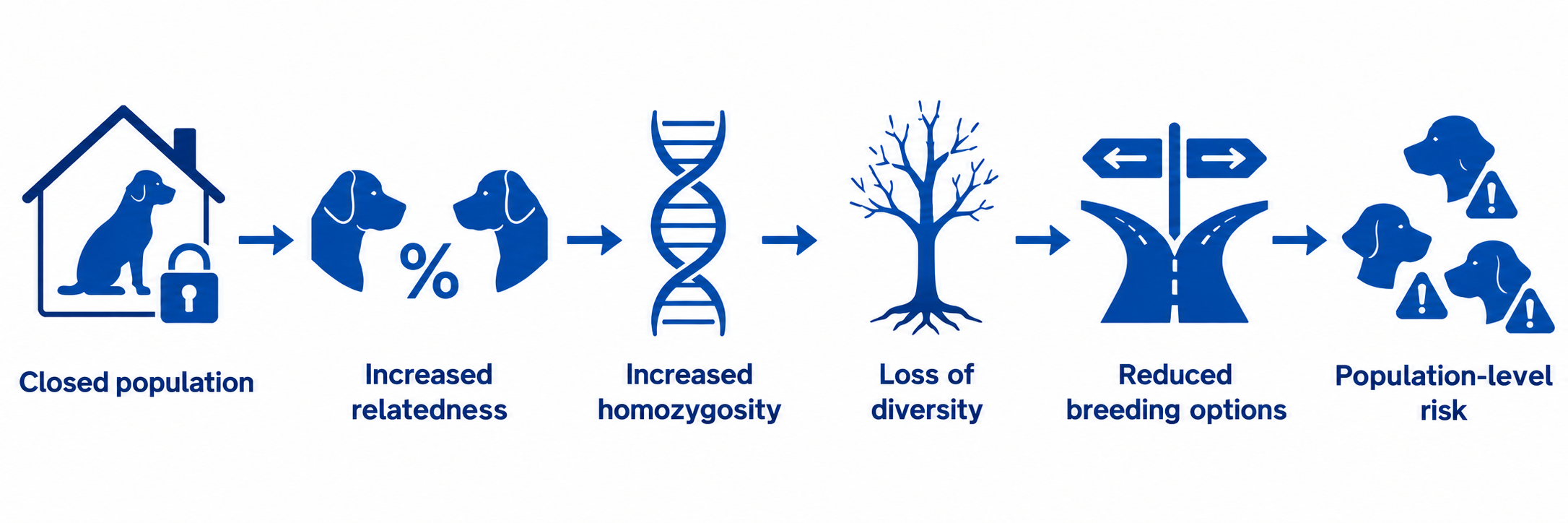
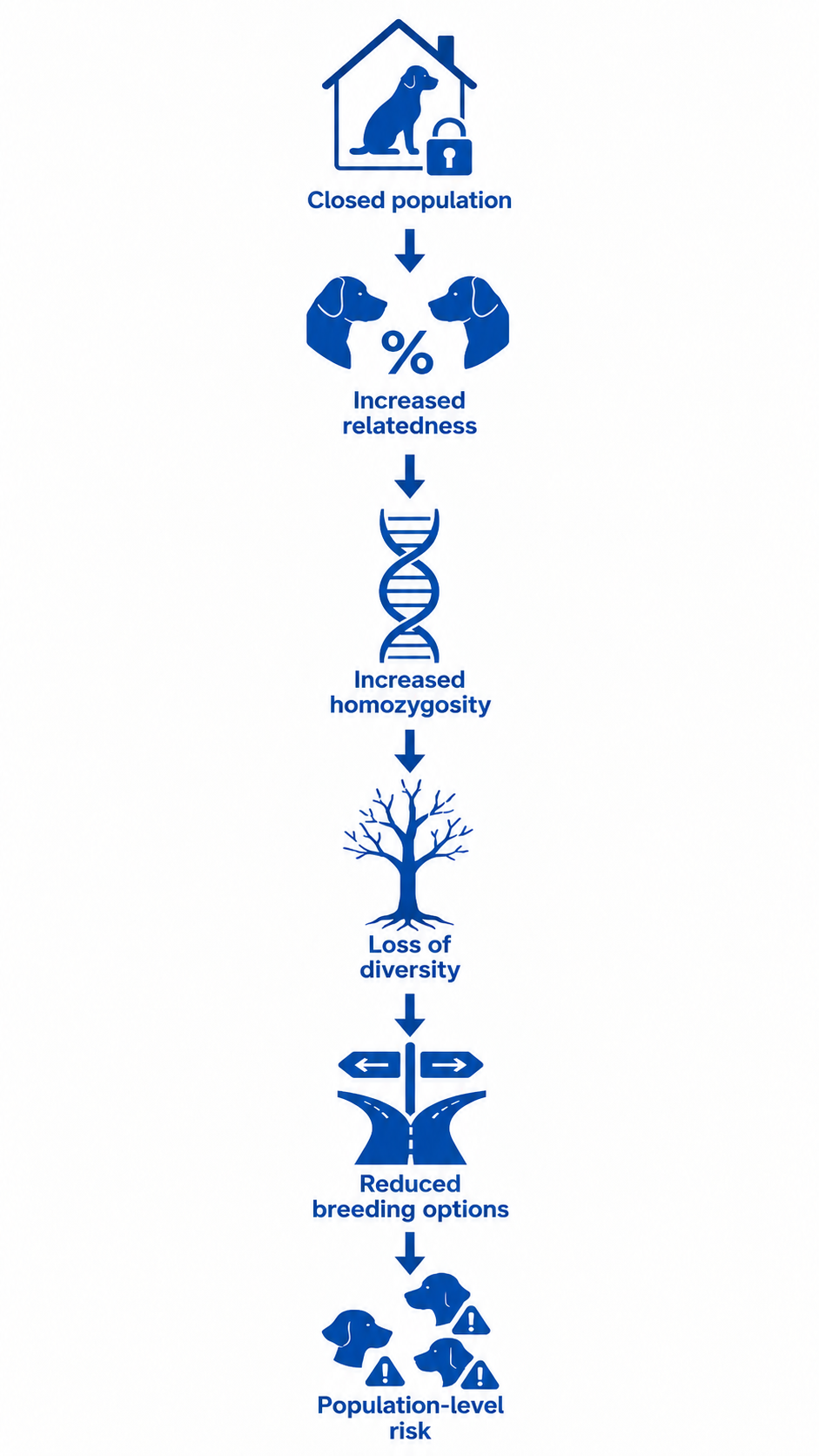
Most dog breeds are maintained as closed populations. Over successive generations, the same bloodlines recur in pedigrees, especially when only a limited number of dogs are used for breeding.
Inbreeding and genetic diversity
As relatedness gradually accumulates, homozygosity and inbreeding increase, while the genetic diversity available in the population steadily declines. Diseases, often hereditary, become more common.
Why small breed populations are especially vulnerable
These problems become more severe and develop faster in breeds with small populations. They can be difficult to slow down, even when individual breeding pairs appear to have been chosen sensibly.
Modern population management
Managing a breed today takes more than choosing a suitable mating. It requires a population-wide assessment of the diversity available, the balance between bloodlines, the genetic contributions of breeding dogs, and changes in relatedness over time.
Current breeding practices and their consequences
The Mechanisms of Canine Genetics at the Population Level
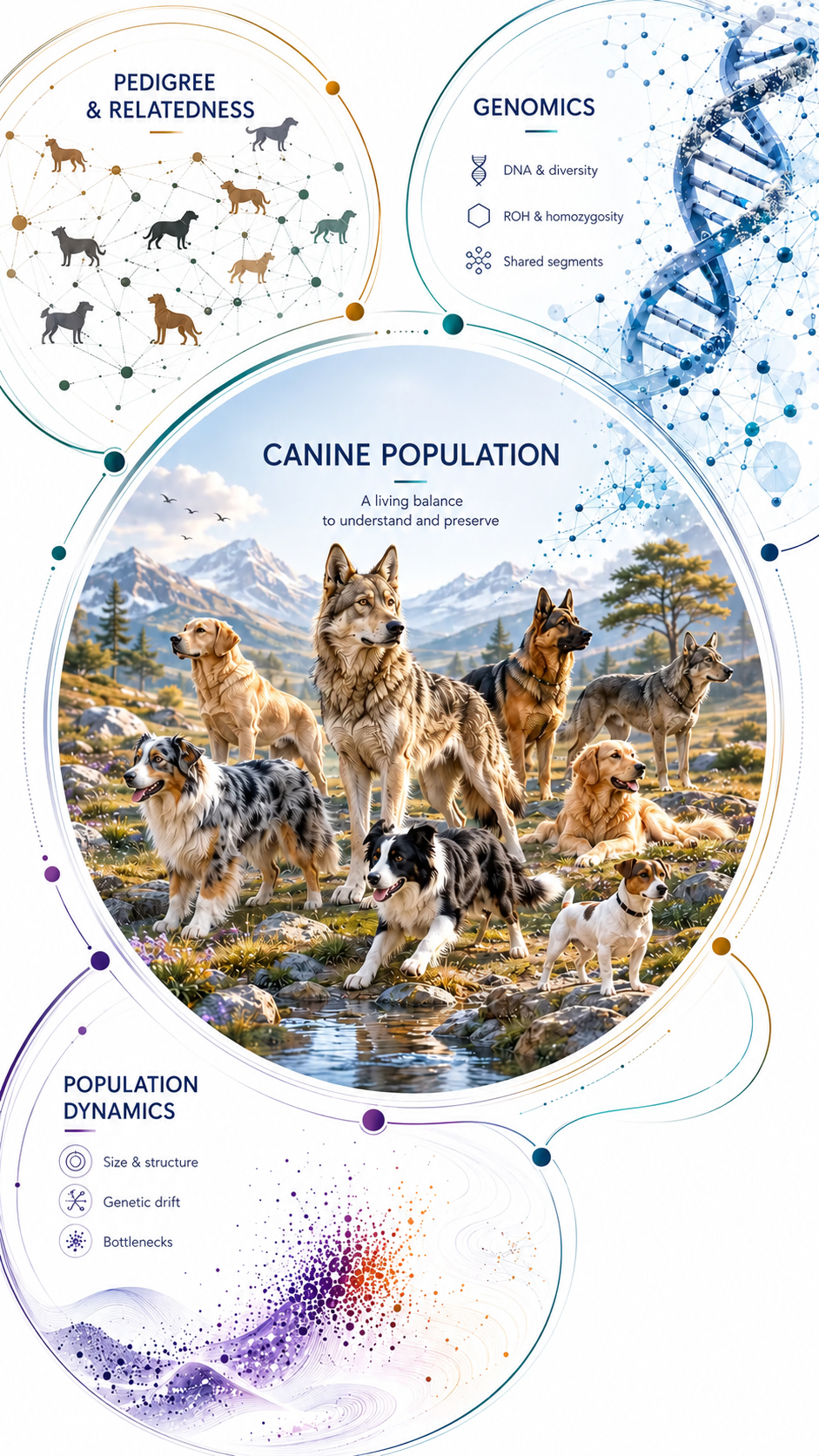
Understanding a canine population requires linking several levels of interpretation: the pedigree, the genome, demographic dynamics, and collective choices.
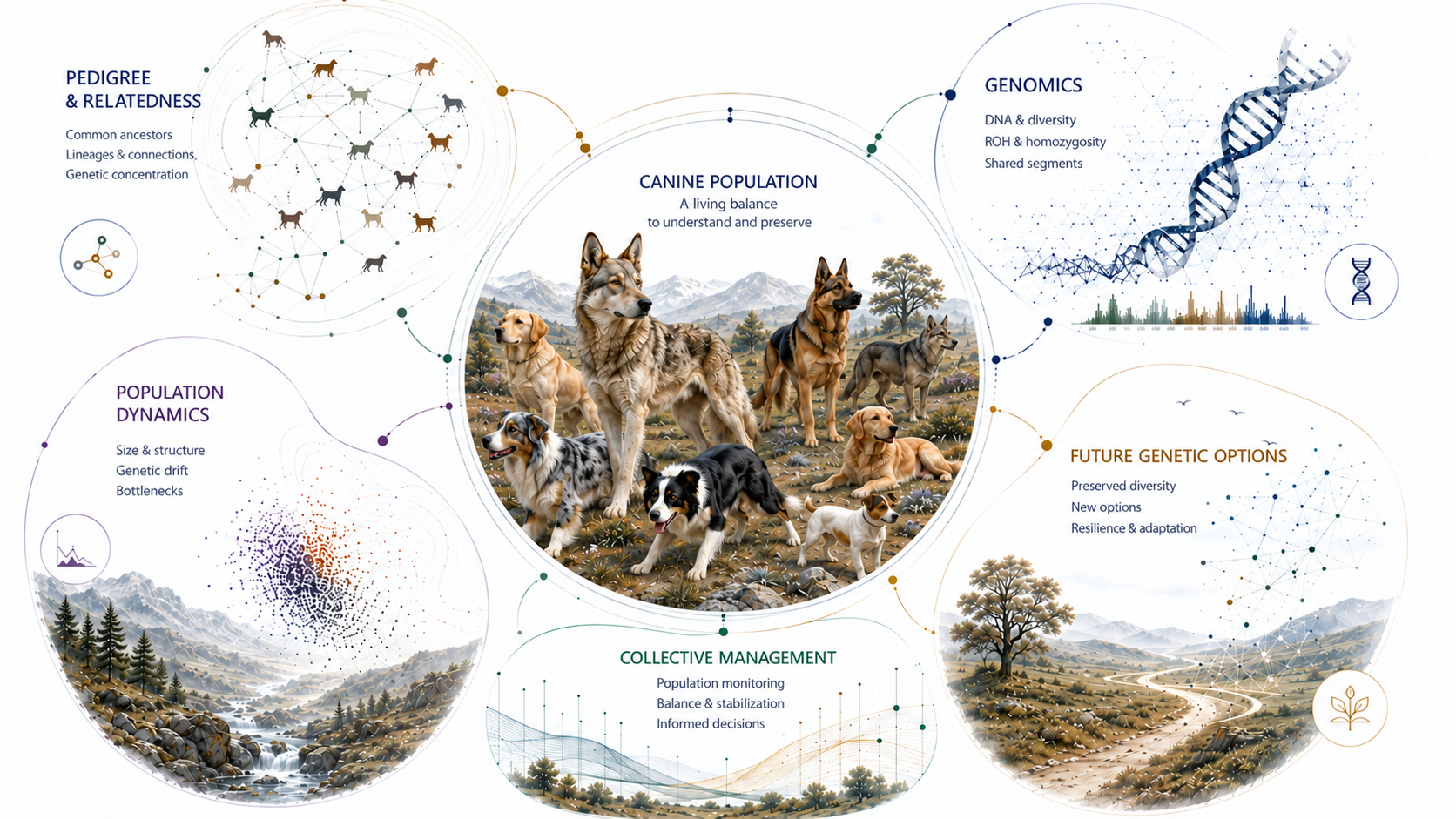
Key Concepts in Purebred Dog Genetics
Population
A breed can decline without disappearing
Explore how closed populations change over time and learn to recognise the early warning signs of decline.
Pedigree
2. What pedigrees cannot tell us
There is more to inbreeding than a coefficient: understanding actual relatedness within a population.
Genetic diversity
3. Keeping genetic options open
A breed’s future depends on its genetic diversity. Learn what diversity means, how it is lost and why it matters.
Genomics
4. What DNA can reveal
Runs of homozygosity (ROH) and genomic analysis reveal aspects of a population’s history that pedigrees alone cannot show.
Test your knowledge!
What if just a few questions could help you better understand the future of dog breeds?
Test your knowledge of inbreeding, genetic diversity, and breeding decisions. Some of the answers may surprise you.
Ready to take the challenge?
Misconceptions About Canine Genetics We Need to Leave Behind
Some beliefs are still widespread in the dog world. They may seem reassuring, but they often lead to a distorted view of reality. Understanding purebred dog genetics at the population level also means being willing to let go of a few comforting shortcuts.
They may be reassuring, but they can also distort our understanding of what is happening.
Understanding purebred dog genetics at the population level also means being willing to let go of a few comforting shortcuts.
“A good-looking, prize-winning dog that meets the breed standard must be good for the breed.”
“Aren’t backstreet breeders, puppy farms and breeding outside France’s LOF register responsible for the loss of genetic diversity in dog breeds?”
“This all sounds very complicated. Dog breeds have always managed without these calculations.”
“My dogs have been fully health-screened, so the health issue is taken care of.”